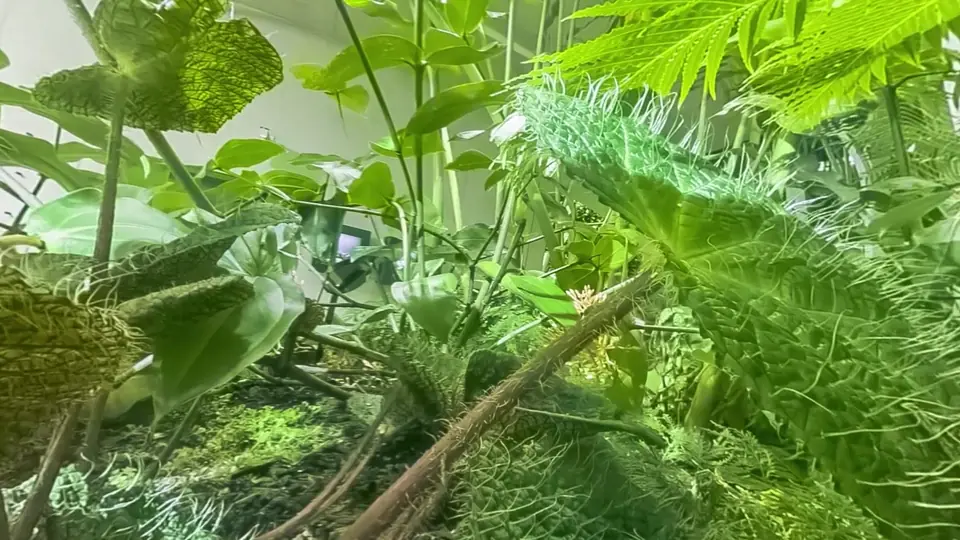
Immersive Warsaw 2026 · 5 November · Kinoteka, Warsaw
The camera doesn’t exist yet
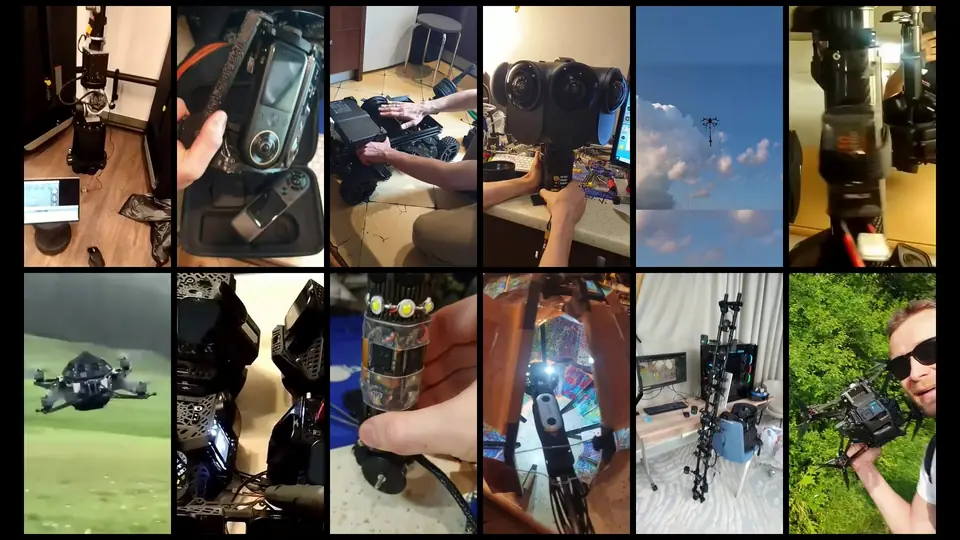
A short, video-first talk by Andrii Shramko — an inventor who builds cameras for shots nobody can film: a 3D 360 camera that survives a cliff dive, macro 3D with 5 mm between the lenses, a 14-camera drone at 250 km/h, housings for tornadoes, and 3D Gaussian splat scans of whole towns.
 Andrii Shramko · inventor & immersive filmmaker
The talk
Every few months a director asks Andrii Shramko for a shot that has no camera. In this talk he walks through five of those jobs — what was asked for, why it was physically impossible, what broke first and what finally went to set.
It is a talk for filmmakers rather than engineers: mostly footage and hardware, very little text on screen. It starts with the 360 rigs he built when nothing on the market could move a 360 camera smoothly, and ends with 3D scans of whole towns and volumetric video of people who walk instead of standing still.
- When
- Thursday, 5 November 2026
- Where
- Kinoteka, Palace of Culture and Science, pl. Defilad 1, Warsaw
- Event
- Immersive Warsaw 2026 by Immersa
- Format
- Talk in English, up to 20 minutes
Five stories, five cameras
Each one starts with a shot nobody could film.
 01
Cliff divers: a 3D 360 camera that survives the water
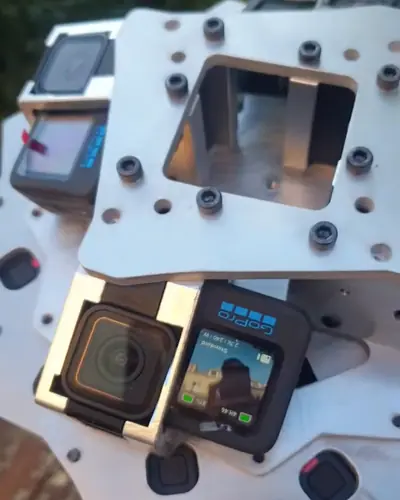
The director wanted the audience to jump with the diver — off the platform, through the surface, under the water. My first rig, printed in plastic, broke on location (Mostar, 2022: “slight structural damage”). The next one, milled from aluminium with MovieBird in Opole and carrying 19 GoPros, survived hundreds of drops.
Watch in the deck →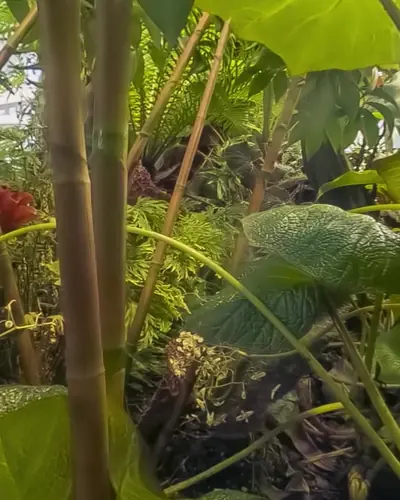 02
Macro 3D 360: five millimetres between the lenses
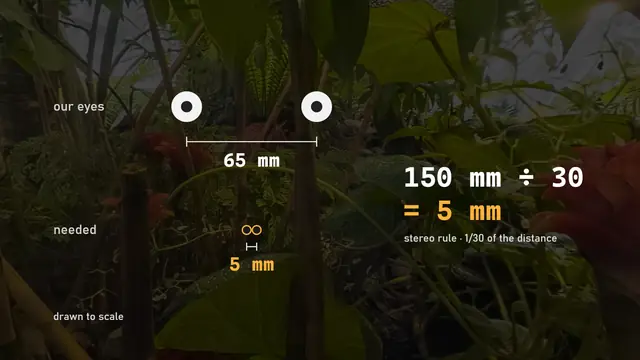
Human eyes are about 65 mm apart. To film in 3D from 15 cm away — at ground level, where no person can stand — the lenses have to be about 5 mm apart. No 3D 360 camera had that. I put six tiny cameras into one body; the plastic housing melted, the metal-printed one worked.
Watch in the deck →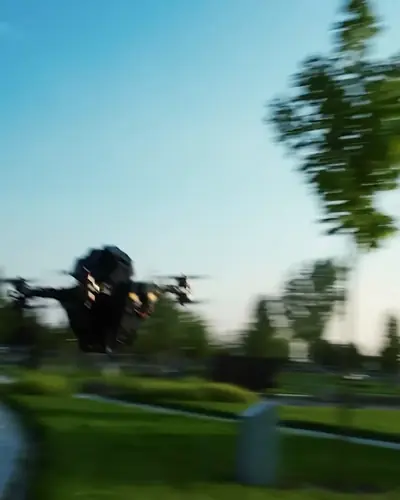 03
A 14-camera drone at 250 km/h
To fly beside wingsuit pilots we built a drone with 2RAW: seven cameras on top, seven underneath, 8 kg, up to 250 km/h. A 360 camera sees everything, including its own drone, so the propellers sit in the blind seam between two lenses and never appear in the frame. We got three shots — one is in the film — and then lost the drone.
Watch in the deck →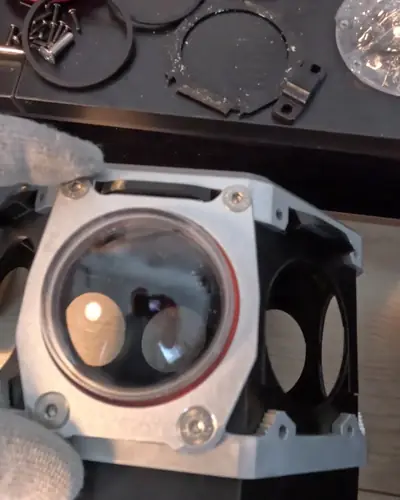 04
Tornado: keeping eight lenses dry
Housings for 3D 360 cameras that film inside tornadoes and hurricanes, with the scientists who chase them. The storm is not what ruins the shot: one drop on one of eight fisheye lenses breaks the stitch, and nothing can wipe a convex lens. So an air knife blows the water away. Four prototypes, tested in my shower.
Watch in the deck →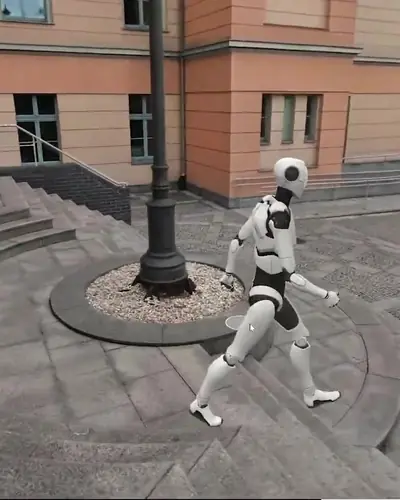 05
From iPhones to 3D Gaussian splats
For an Usher music video shot on iPhone 15 Pro, the studio Locomotive needed bullet-time, fast. I drew a rig built from the iPhones themselves — Przemysław built it on location — and turned the footage into 3D Gaussian splats with Postshot, before Postshot was even a product. Today we scan towns, streets, interiors and people; NVIDIA, World Labs and the SuperSplat team use our scans to show and test their software.
Watch in the deck →
How the presentation works
The deck is a single web page with its own video files — no PowerPoint, and no internet needed on stage. It runs in Google Chrome or Microsoft Edge.
1 · projector
Window 1 · for the audience
The slides, full screen on the projector (key F). Every slide is video; the clips loop and never pause.
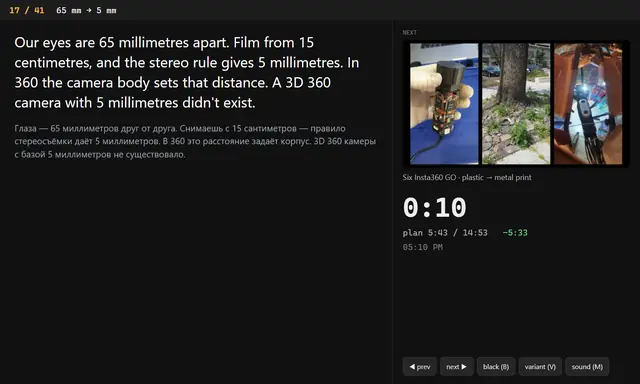
2 · laptop · confidence monitor
Window 2 · for the speaker
Press P: speaker notes, the next slide, a timer and the planned time — on the laptop or a confidence monitor. Both windows follow the same clicker.
Keys
| → · Space · PageDown · click · clicker | next slide |
|---|---|
| ← · PageUp | back |
| F | full screen |
| P | speaker window |
| B | black screen |
| M | sound on / off |
| 12 + Enter | go to slide 12 |
| ? | all keys |
Five slides have sound: the opening, a film trailer, a behind-the-scenes clip from the drone shoot, the shower test and the closing music. Chrome plays sound after the first click or key press in the audience window.
Event organisers get the same deck as a ZIP to run offline from a laptop. Tested on Windows 10 with Google Chrome.
Weak internet at the venue? Open the online deck once beforehand and press “Save for offline” (menu or first screen): all its videos, about 1 GB, are stored in this browser with a progress bar — when it says Ready, the deck plays without internet.
Open the presentationTry it: open the presentation and press P.

About Andrii Shramko
Andrii Shramko is an inventor and spatial-video engineer who builds the cameras that don’t exist yet. For over a decade he has designed custom camera rigs, stabilisation systems and capture pipelines for shots the market has no equipment for — a stereoscopic 360 camera that survives hitting water from a cliff-diving platform, a 14-camera drone flying at 250 km/h beside wingsuit pilots, macro 3D with five millimetres between the lenses, and camera housings that shoot inside tornadoes. His rigs and pipelines have been used on productions for Red Bull, Meta, National Geographic and Mastercard. Today he works in 3D and 4D Gaussian Splatting and publishes a free library of production-grade 3DGS scans used by NVIDIA, World Labs and a number of research teams.
Open to collaboration
I’m always glad to meet interesting people and to help teams build incredible things: a camera rig for a shot nobody can film, 360 and 3D capture, 3D and 4D Gaussian splatting, or a partner for a production, a festival or research. Have a shot nobody can film? Tell me about it — in five minutes I’ll tell you whether it’s physics or budget.
Questions
Who is Andrii Shramko?
An inventor and immersive filmmaker based in Poland who designs and builds custom 360°, 3D 360 and volumetric camera systems — and the stabilisers, housings and pipelines around them — for shots that no existing camera can film. His work has been used on productions for Red Bull, Meta, National Geographic and Mastercard.
What is the talk “The Camera Doesn’t Exist Yet” about?
Five real jobs where the camera had to be invented first: cliff diving, macro 3D 360, a 14-camera drone at 250 km/h, cameras for tornadoes, and an iPhone bullet-time rig that led to 3D Gaussian splat scans. For each: what was asked, why it was impossible, what broke, and what went to set.
When and where is it?
On Thursday, 5 November 2026, at Immersive Warsaw 2026 in Kinoteka, Palace of Culture and Science, pl. Defilad 1, Warsaw. The event is organised by Immersa.
Can I watch the presentation online?
Yes. Open the interactive deck in Chrome or Edge and press → (or click) to go forward; press P for the speaker notes. It is the same deck that runs on stage, so it is heavy on video — a fast connection helps.
How do you keep a drone out of a 360 shot?
Between two neighbouring lenses there is a narrow zone neither of them sees; that is where the stitch line runs. If the frame is built so the propellers sit exactly in that seam, the drone is not in the shot. The new part in the talk is doing it with fourteen cameras at 250 km/h.
What is 3D Gaussian Splatting?
A way to turn ordinary photos or video into a photoreal 3D scene made of millions of small, soft, coloured blobs (Gaussians) that render in real time. You can fly a virtual camera through a whole town scanned this way.
Can Andrii build a camera rig for my production?
That is exactly his job. Describe the shot: book a call, write on LinkedIn or by e-mail, or use the Collaboration form on this page.